Hillside Erosion Control and Final Grade Work Done Right
When a slope starts moving, it does not stop on its own. What you get instead is a slow creep of soil toward your foundation, ruts carved out by every rain event, and bare dirt where ground cover used to be. Left alone, that becomes a much bigger problem - and a much bigger bill.
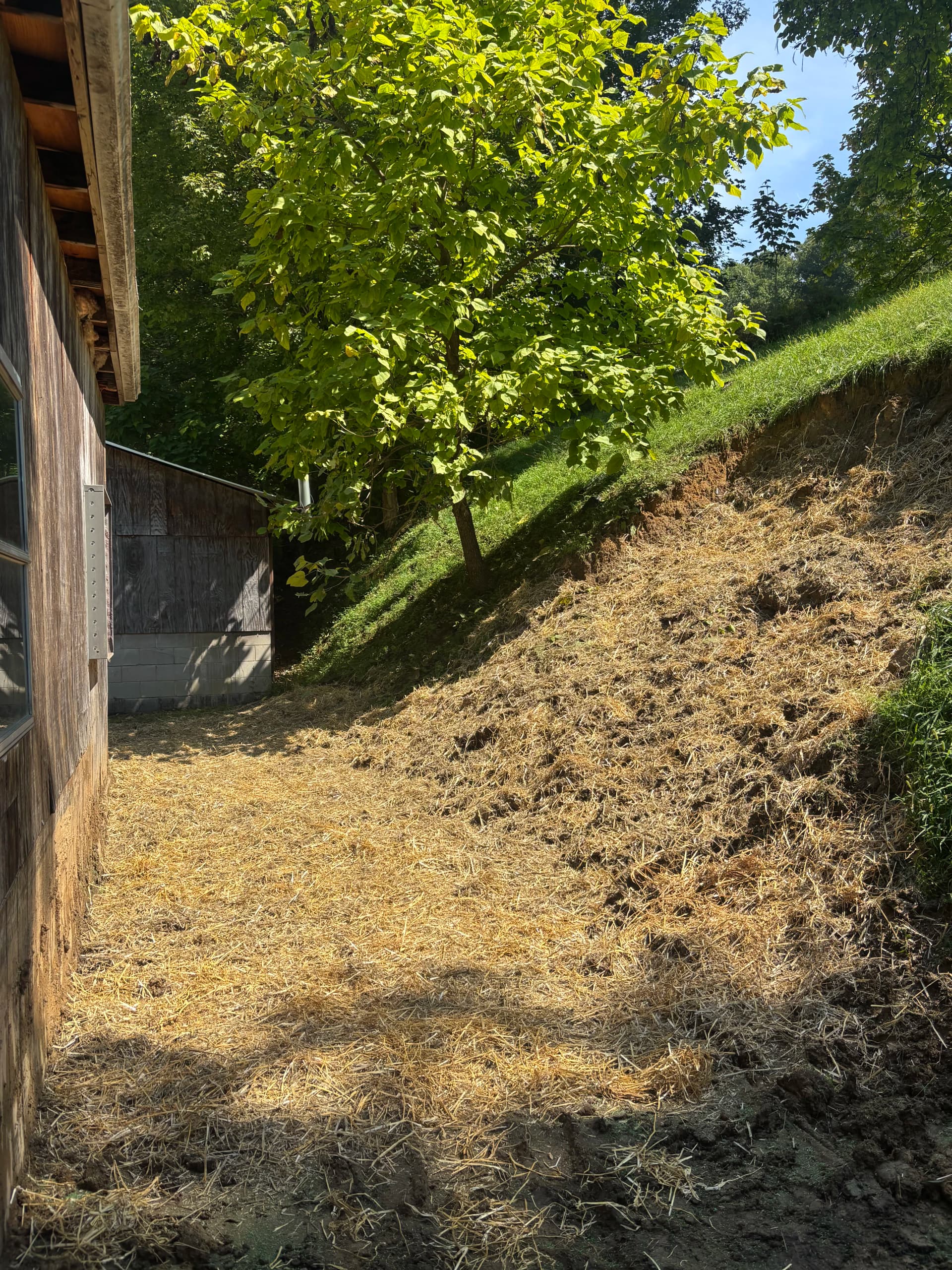
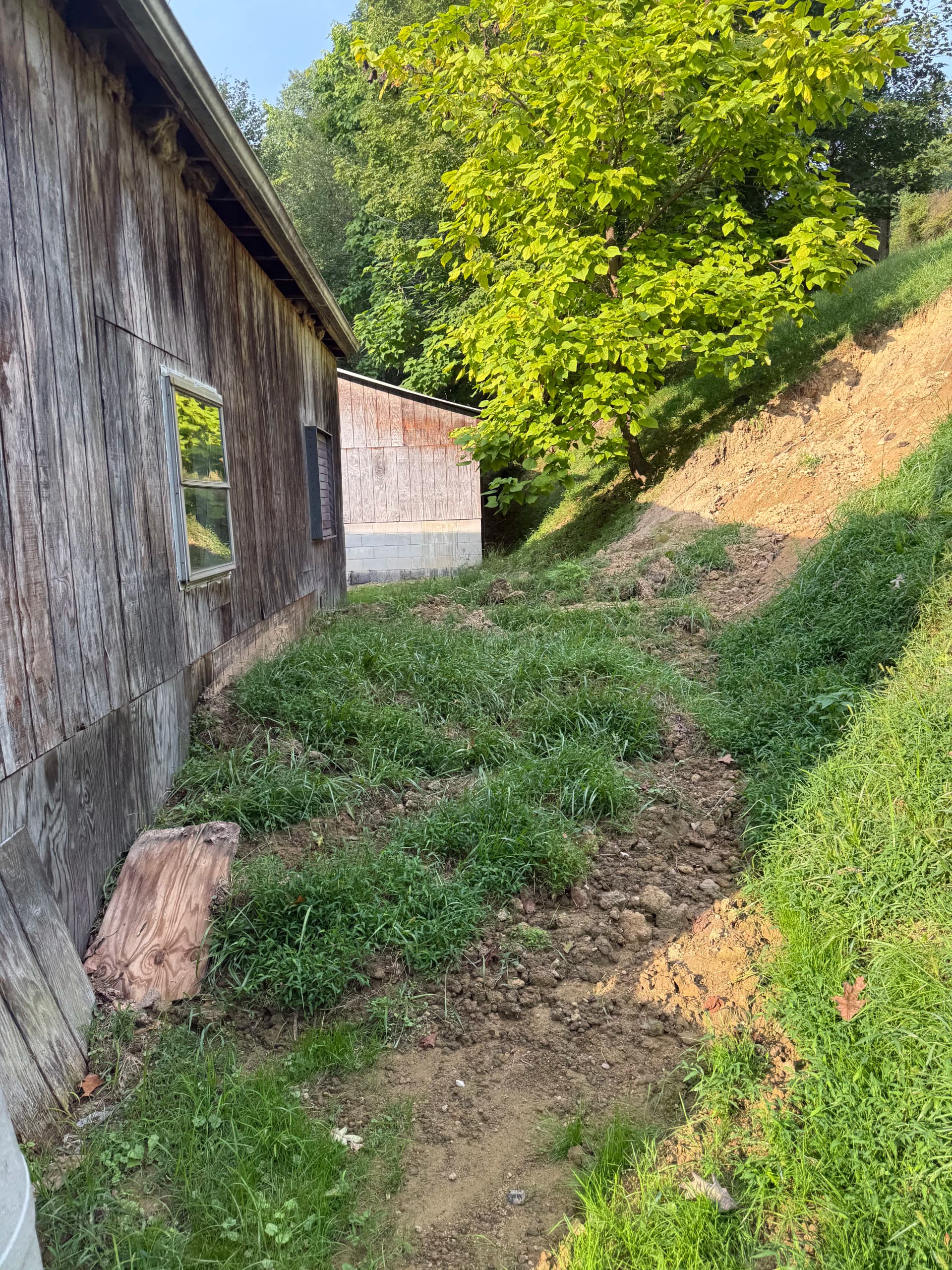
Here is what we were working with: a steep hillside running right alongside a building, with visible erosion channels cutting through what little grass cover remained. The soil was actively breaking loose and washing down toward the structure. Not a situation you want to ignore heading into fall rain season.
We came in, regraded the slope to redirect water flow away from the building, and finished the whole area with a straw mulch cover. That straw layer does real work - it holds moisture, protects the newly graded soil from washing out again, and gives seed a chance to establish before the next heavy rain hits.
This kind of work sits right at the intersection of land clearing and final grade work. It is not glamorous, but it is exactly what keeps a building protected and a hillside from becoming a liability. Getting the grade right the first time is what separates a lasting fix from a patch job.
If you have got a slope near a structure that has been giving you problems, this is the type of work worth doing before conditions get worse. A stable, properly graded hillside is one less thing to worry about when the weather rolls in.