Cracked Asphalt Out, Heated Concrete Driveway In
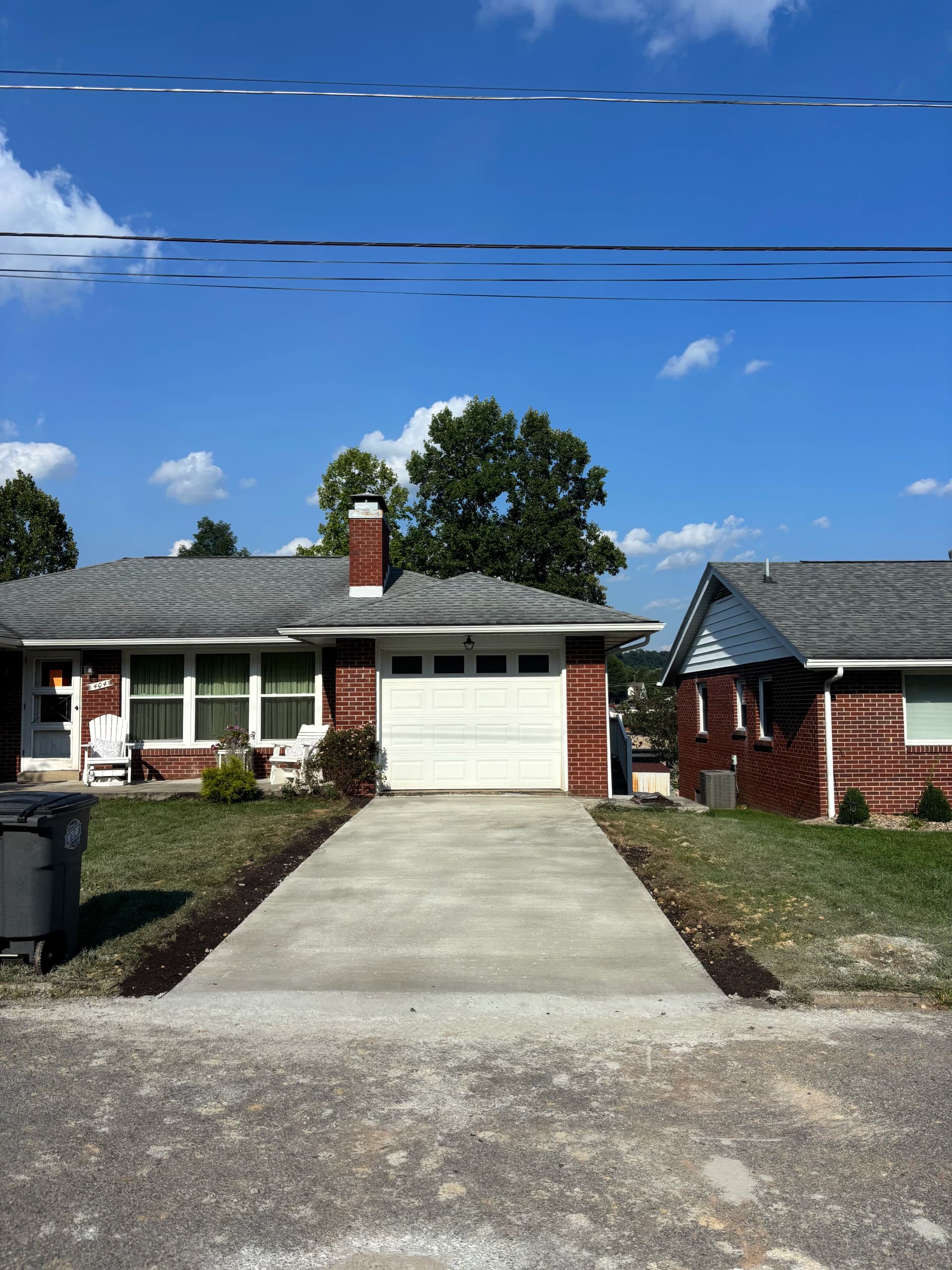
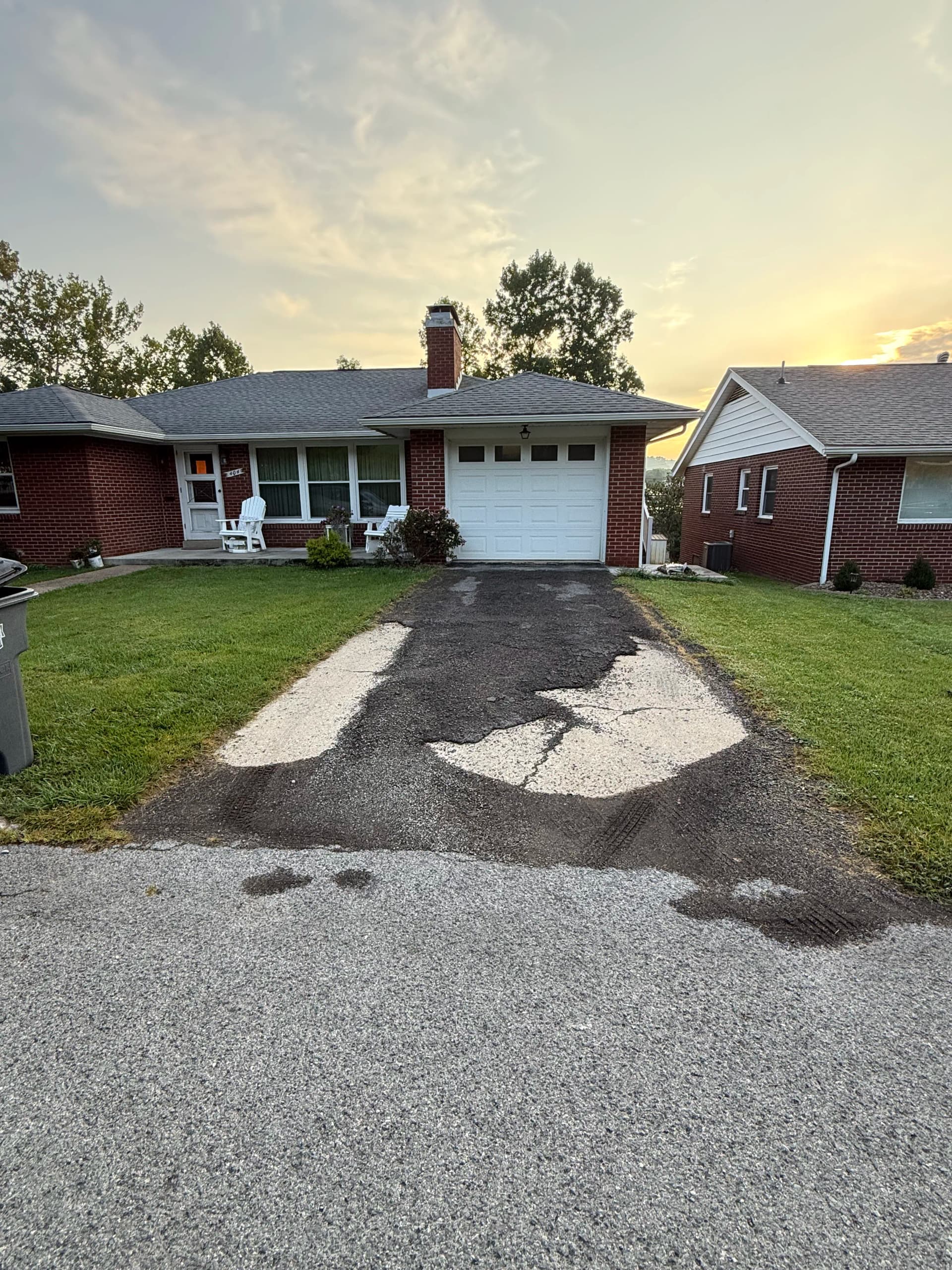
Here's what we were working with - a badly cracked asphalt driveway that had been patched over and over again. At some point, patching stops making sense. The surface was breaking apart in large sections, and no amount of filler was going to fix the underlying problem. The only real solution was to tear it out and start fresh.
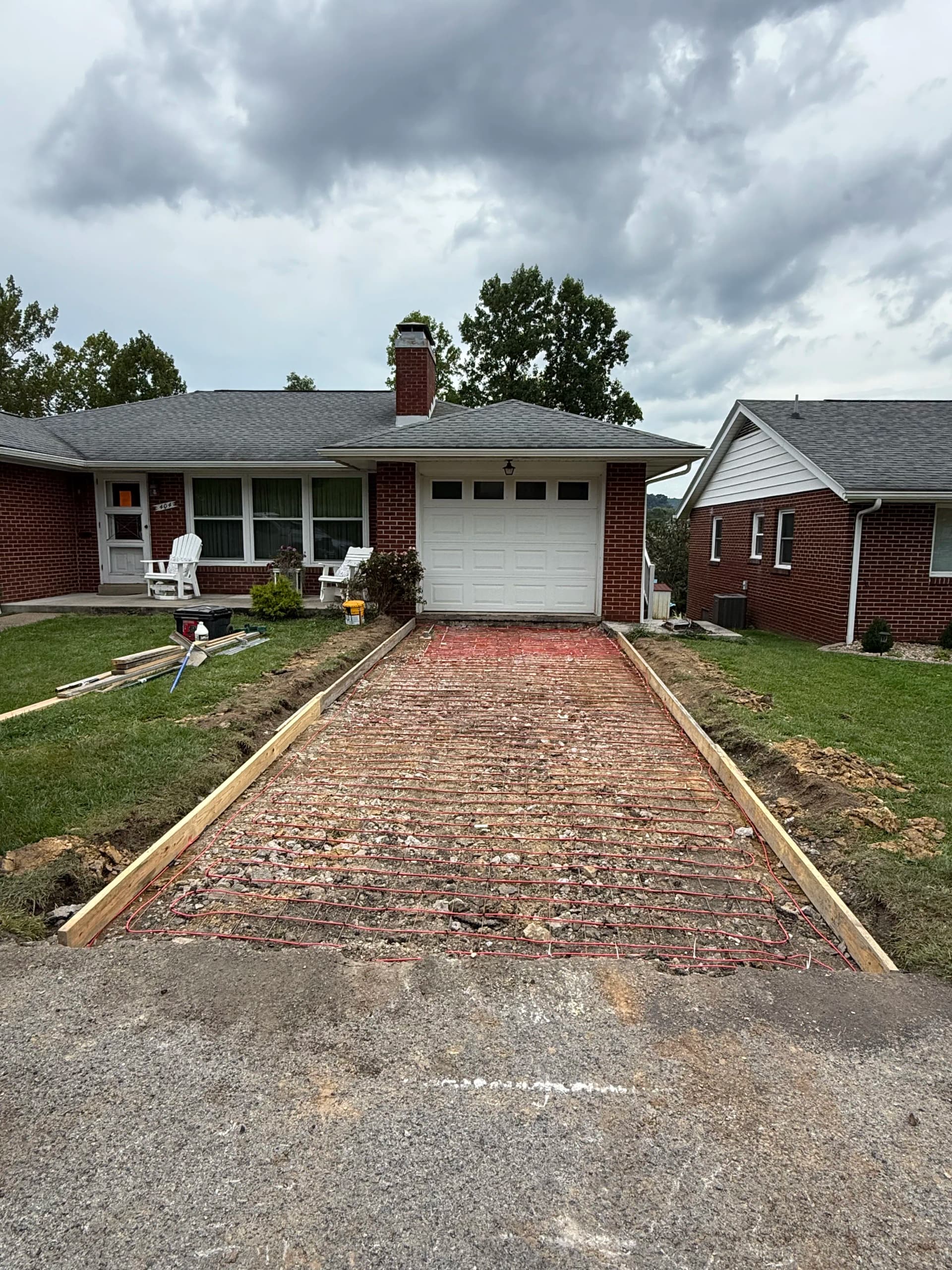
That's exactly what we did. We pulled the old asphalt, prepped the base, and installed a heating system before a single drop of concrete was poured. You can see the radiant heat tubing laid out in a grid pattern across the full width of the driveway, set into the gravel base with wood forms framing everything in place. That's the part most people never see - but it's the part that matters most.
A heated driveway works by running warm water through those tubes embedded in the concrete. When snow and ice hit the surface, it melts on contact. No shoveling. No rock salt tearing up your concrete. No early morning scramble before work. For homeowners who deal with serious winters, it's one of those upgrades that genuinely changes the routine.
What we ended up with is a clean, uniform concrete driveway that looks sharp against the brick home and will hold up for decades. The finish is smooth and consistent from edge to edge - a serious step up from what was there before. Fall is actually a smart time to think about a project like this, since you want the concrete fully cured before the first hard freeze hits.
If your driveway is at the point where patches aren't cutting it anymore, a concrete replacement - with or without a heating system - is worth a conversation. It's one of those jobs that pays off in both function and curb appeal.